
Introduction
Getting a display program right once is hard enough. Getting it right across 50 dealer locations, 200 retail stores, or a rotating list of distributor warehouses is a different problem entirely.
Many brands struggle with inconsistent setups: one location gets all the hardware, another is missing graphics, and a third receives the wrong product samples.
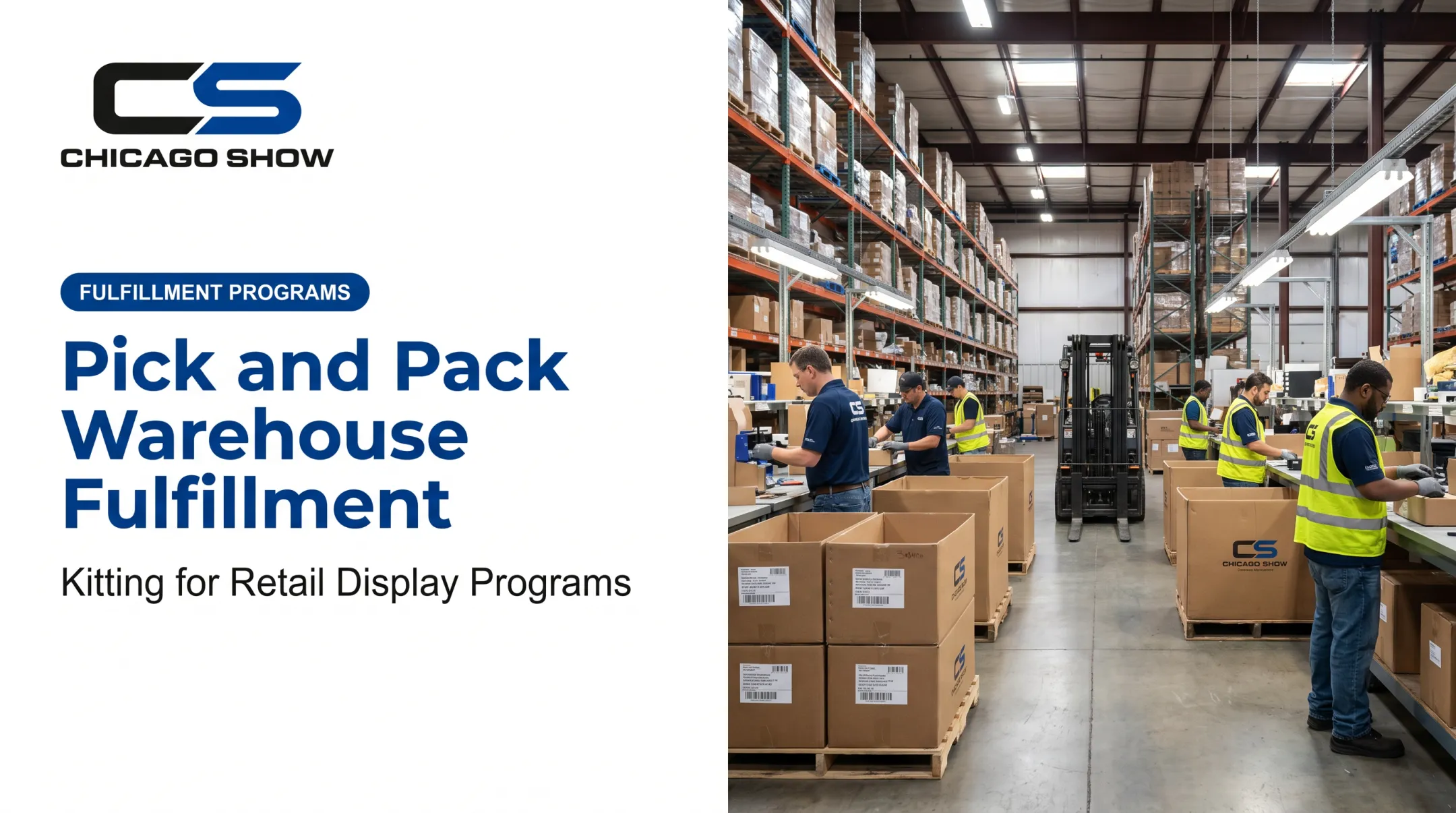
Kitting solves the content problem: it combines separate pieces into one defined, ready-to-deploy package. Fulfillment solves the movement problem by storing, preparing, and shipping those packages to the right place at the right time.
This article breaks down how the process actually works, where it gets used in retail and dealer-network programs, what to ask before hiring a provider, and how display-program experience changes the outcome.
Key Takeaways
- Kitting packages display, promotional, or product components into one standardized, deploy-ready unit.
- Fulfillment covers inventory management, pack-out, quality checks, and shipping on top of assembly.
- Specs ownership, clear communication, and QC separate a strong provider from basic box-stuffing.
- Repeatable retail, dealer-network, and point-of-purchase programs see the strongest kitting payoff.
What Are Kitting and Fulfillment Services?
Kitting means gathering separate components (a fixture, graphics, hardware, samples, and instructions) and assembling them into one complete unit built to a documented specification. Fulfillment picks up from there: it moves that finished kit from kitting to its destination locations, covering inventory management, labeling, shipment prep, and delivery support.
These terms get used loosely, so it helps to separate them:
- Bundling — grouping products together for sale (a commercial offer, not a physical build process)
- Kitting — a repeatable physical assembly with a defined component list and packaging method
- Assembly — constructing the display or fixture itself, not just collecting parts
- Pack-out — protecting and configuring the finished kit for transit
Display Deployment Kit vs. Product Bundle
A standard product bundle might be three skincare items shrink-wrapped together for a retail shelf. A retail display deployment kit is different: it might include a countertop fixture, branded header card, a set of product samples, assembly hardware, and a one-page setup card — all packed to survive shipping and arrive ready for a store associate to unbox and place.
Treat each kit as a controlled program specification, not a loose collection of parts. Before any unit ships, lock in:
- Documented contents and exact quantities
- A defined packaging method
- A version number
- Clear quality expectations
How Does the Kitting and Fulfillment Process Work?
A solid kitting and fulfillment workflow follows a consistent sequence, whether it's one location or three hundred.
- Program discovery: Define the kit's purpose, destination, components, quantities, rollout schedule, packaging needs, and how it will be used in the field.
- Kit specification (bill of materials): Document every component, required quantity, packaging material, hardware piece, insert, label, and instruction sheet.
- Component intake: Receive or gather display parts, printed materials, accessories, samples, and hardware before assembly starts.
- Assembly and pack-out: Arrange components consistently, protect fragile parts, and prepare units for handling and shipping.
- Quality control: Check contents against the specification, inspect finished units, confirm graphics and version accuracy, and document any exceptions before shipment.
- Fulfillment and rollout: Support single-location deliveries, multi-location rollouts, phased launches, replenishment orders, and recurring refresh cycles.

Timing changes how that sequence runs:
- Built in advance: Units sit in storage and ship as soon as a location confirms readiness—useful for seasonal programs or staggered dealer rollouts.
- Assembled closer to shipment: Lowers the risk of holding inventory against specs that may still change, but needs tighter alignment between component arrival and the ship date.
Common Applications for Kitting and Fulfillment Services
Kitting and fulfillment show up wherever a brand needs identical components to arrive intact at multiple locations on a schedule.
Automotive dealer and service networks. OEM programs, aftermarket brands, and dealership marketing teams rely on kitting to deploy consistent signage, counter displays, and accessory fixtures across hundreds of franchised locations.
RRD's 2023 case study describes producing thousands of personalized signage kits for award-winning dealerships and service shops. Each kit matched five distinct printed assets, from door decals to tabletop standees, to the correct dealer.
CPG and consumer brand merchandising. Chains with hundreds of locations often need store-specific kit variants rather than one-size-fits-all materials. A 2019 case involving a national franchise chain used location profiles to control which point-of-purchase kit each of roughly 2,900 franchised and company-owned locations could order, cutting down on unnecessary or obsolete materials reaching the field.
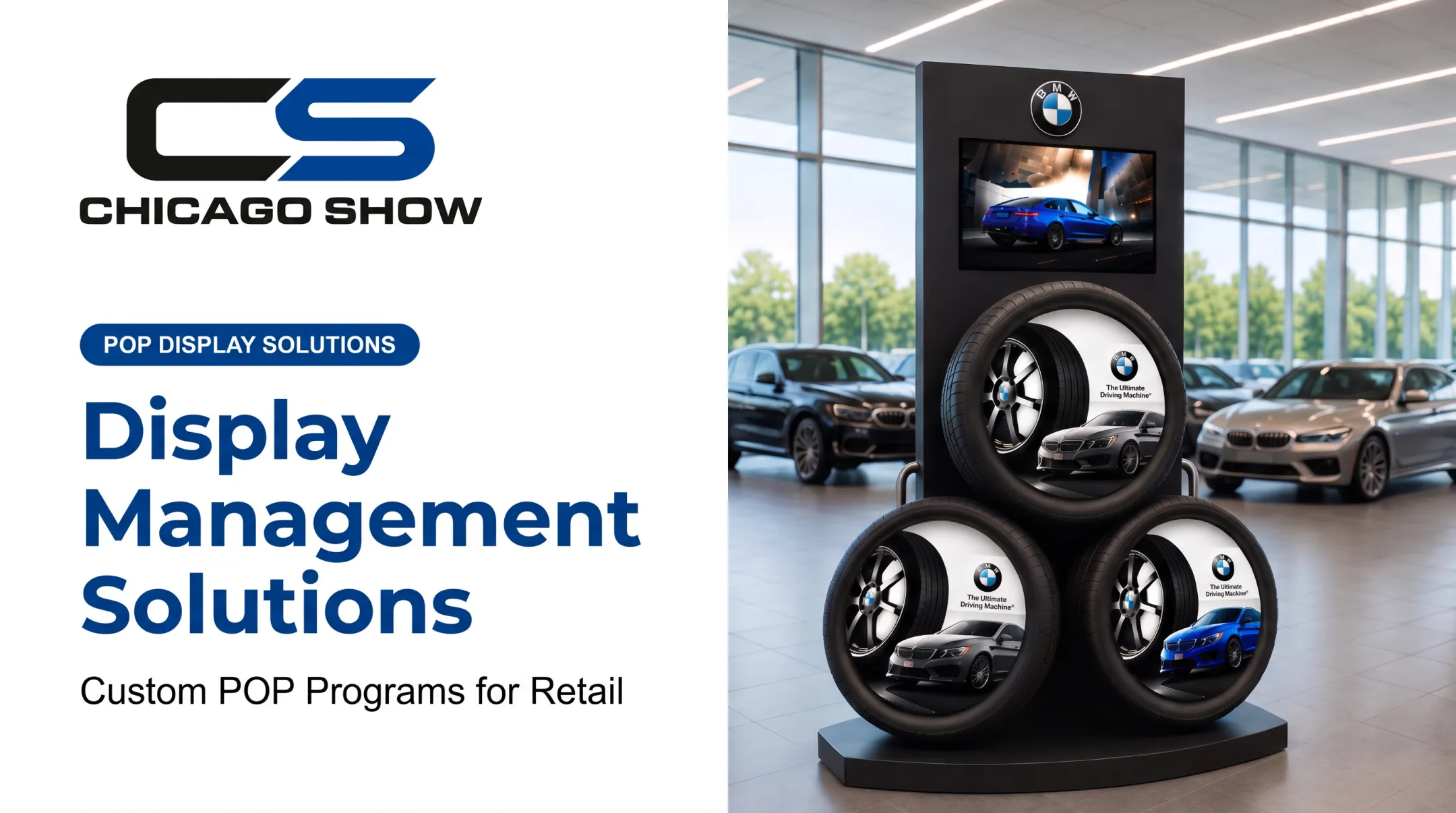
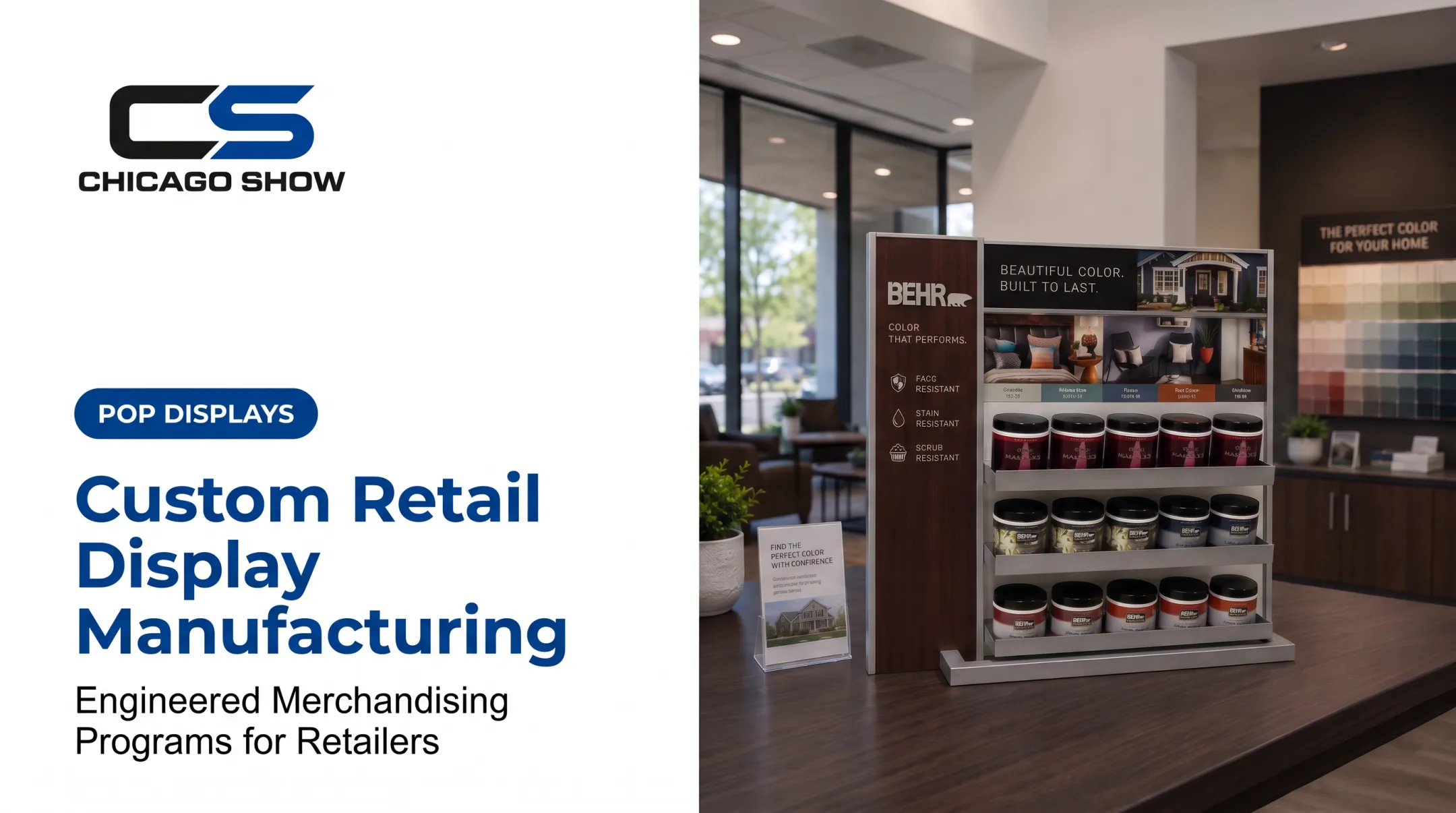
Retail point-of-purchase and sampling programs. Counter displays, floor fixtures, interactive demo units, and sample centers all depend on kits arriving complete: product, signage, and setup instructions together, not scattered across separate shipments.
This mirrors how Chicago Show's customer base operates day to day: automotive aftermarket and dealership programs, CPG merchandising, and consumer brands running sampling or demo units across retail floors. These are multi-location merchandising programs, not one-off ecommerce subscription boxes.

Why Use Kitting and Fulfillment for Display Programs?
Pre-defined kits reduce the number of loose pieces a store associate or field rep has to identify, sort, and assemble after delivery. That's the core value: less guesswork at the destination, more consistency across every location.
Consistency and protection. Standardized pack-out (same component list, arrangement, protective materials, and inspection criteria) keeps one store's display from looking different than another's.
Packaging should still match the unit's size, weight, and fragility. The International Safe Transit Association recommends testing packaging against the actual distribution environment—including drop, vibration, and compression hazards—rather than assuming a generic box will hold up.
Catching problems before they reach the field. A specification check before shipping can flag missing hardware, incorrect graphics, damaged components, or version mismatches. Finding that at the warehouse costs far less than finding it at a dealership that's already opened the box.
Operational flexibility. Consolidated fulfillment supports phased rollouts, recurring reorders, seasonal refreshes, and programs where different locations need different quantities.
In one documented case, a multi-location chain's store-profile approach to kit eligibility was tied to a 14%–22% reduction in production and fulfillment expense. That figure is a single vendor-reported outcome, not an industry average, but it shows what tighter kit control can do.
When Pre-Assembled Kits Make Sense (and When They Don't)
- Choose pre-assembled kits when component lists are stable, rollout timing is predictable, and multiple locations need identical contents.
- Choose order-specific pack-out when specifications are still changing, storage space is limited, or quantities vary significantly by destination.
Building units before demand or specs are confirmed carries real risk: components can go obsolete before they ever ship.
What to Look for in a Kitting and Fulfillment Provider
Not every fulfillment company understands display programs. Many treat every kit as a generic parcel rather than a piece headed for a retail floor, service bay, or dealership counter.
Evaluate the full workflow, not just the assembly step. A provider should handle planning, production management, assembly, inspection, delivery prep, and ongoing program support from start to finish.
Ask about display-specific experience. Does the provider understand how a unit actually gets used in a store or service center? That context shapes packaging decisions, labeling, and install instructions in ways a generic logistics vendor won't anticipate.
Questions worth asking before signing on:
- How do you manage specification and version control across reorders?
- Who handles component sourcing or receiving before assembly begins?
- What packaging protection do you use, and how is it matched to the unit?
- What quality checks happen before a unit ships?
- Who is my single point of contact across planning, production, and delivery?
That last question matters more than it sounds. Programs that bounce between brand, agency, production, and fulfillment teams create handoff gaps, and those gaps are where specs get lost.
Before requesting a quote, have this ready:
- Kit contents, dimensions, and weights
- Quantities, destinations, and timing
- Packaging expectations and inspection requirements
- Expected reorder frequency
How Chicago Show Supports Display Fulfillment
Chicago Show has worked in display and merchandising since 1902, more than 124 years helping brands present products across retail, CPG, automotive, and dealer environments.
That experience shows up in how programs get managed. One accountable point of contact owns the full path:
- Planning and in-house engineering
- Production management, kitting, and pack-out
- Quality oversight and delivery management
Units are checked against specifications before they ship. Timelines stay realistic, and clients get updates before they have to ask.
Programs don't end at the first delivery. Chicago Show supports reorders, refreshes, and rollout waves, and keeps program history on hand so a second-year reorder doesn't mean starting from scratch—whether that phase covers ten locations or two hundred, in different sizes and quantities.

Planning a display kitting or fulfillment program for a brand, dealer network, or agency? Chicago Show can walk through the component list, pack-out plan, and rollout schedule with you.
Frequently Asked Questions
What is kitting in fulfillment?
Kitting combines multiple individual components into one defined, ready-to-ship or ready-to-deploy package, built to a documented specification covering contents, quantities, and packaging method.
What does a kitting specialist do?
A kitting specialist organizes components, assembles and packs out the kit, checks it against specification, manages labeling, and prepares it for shipment or field rollout.
What does a fulfillment service do?
A fulfillment service manages the storage, preparation, packing, shipping, and delivery support for products, kits, or display materials — including ongoing reorders and replenishment.
What is the difference between kitting and bundling?
Bundling groups products together for sale, while kitting involves a defined, repeatable physical assembly and preparation process built around a specific component list.
When should a business outsource kitting and fulfillment?
Signs include recurring multi-component programs, multiple destinations, staff tied up on pack-out, inconsistent quality, or limited storage. Upcoming rollouts and reorder cycles that need dedicated support are strong signals too.