
Many shoppers struggle with tire choices because the differences aren't visible at a glance. Tread patterns, construction, warranty terms — none of that shows up unless someone points it out. A well-planned display does that pointing-out work before a sales associate ever walks over.
This article covers practical tire display ideas, from good-better-best layouts to interactive comparison stations. We'll also get into fixture selection, durability requirements, and how to treat your display as an ongoing program rather than a one-time purchase.
Key Takeaways
- Organize displays by application, performance, or budget — not just by how many tires fit on the rack.
- Pair physical samples with clear signage, tread comparisons, and optional digital content for self-guided research.
- Prioritize stability, durability, and accessibility when selecting fixtures for your showroom or service drive.
- Treat displays as a living program: refresh seasonally, train staff to use them, and track engagement over time.
Why Tire Displays Matter for Sales
A tire catalog can tell a customer a product's mileage rating. It can't show them how a tread void pattern channels water, or how a sidewall's reinforced shoulder looks next to a standard one. Physical displays close that gap.
When shoppers can see and touch actual samples, side by side, three things happen:
- They start the conversation with their own needs ("I drive on gravel roads") instead of a blank stare at a wall of inventory.
- Sales staff spend less time explaining basics and more time addressing vehicle-specific fitment.
- Customers ask sharper questions, which tends to shorten the path to a decision.
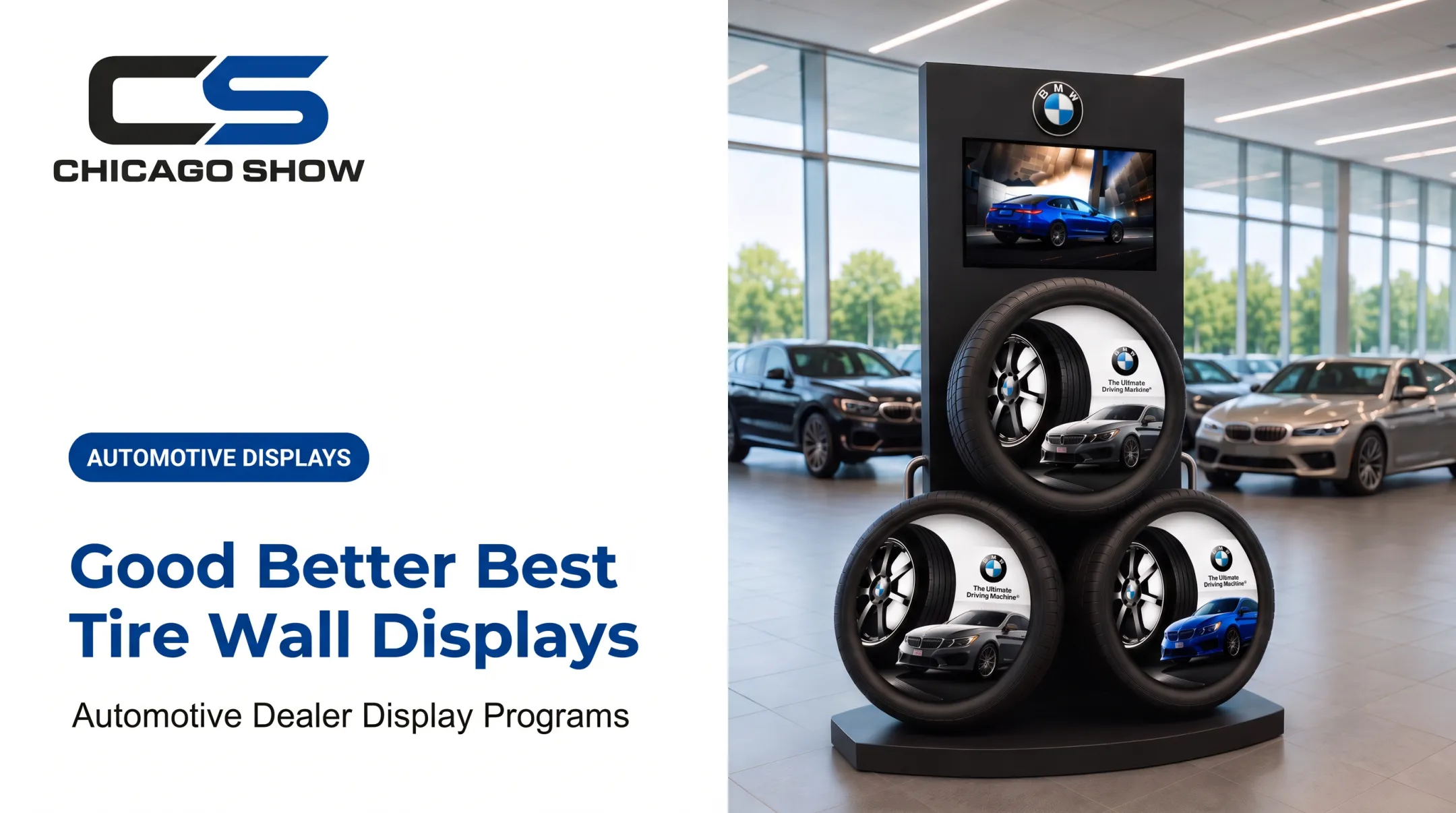
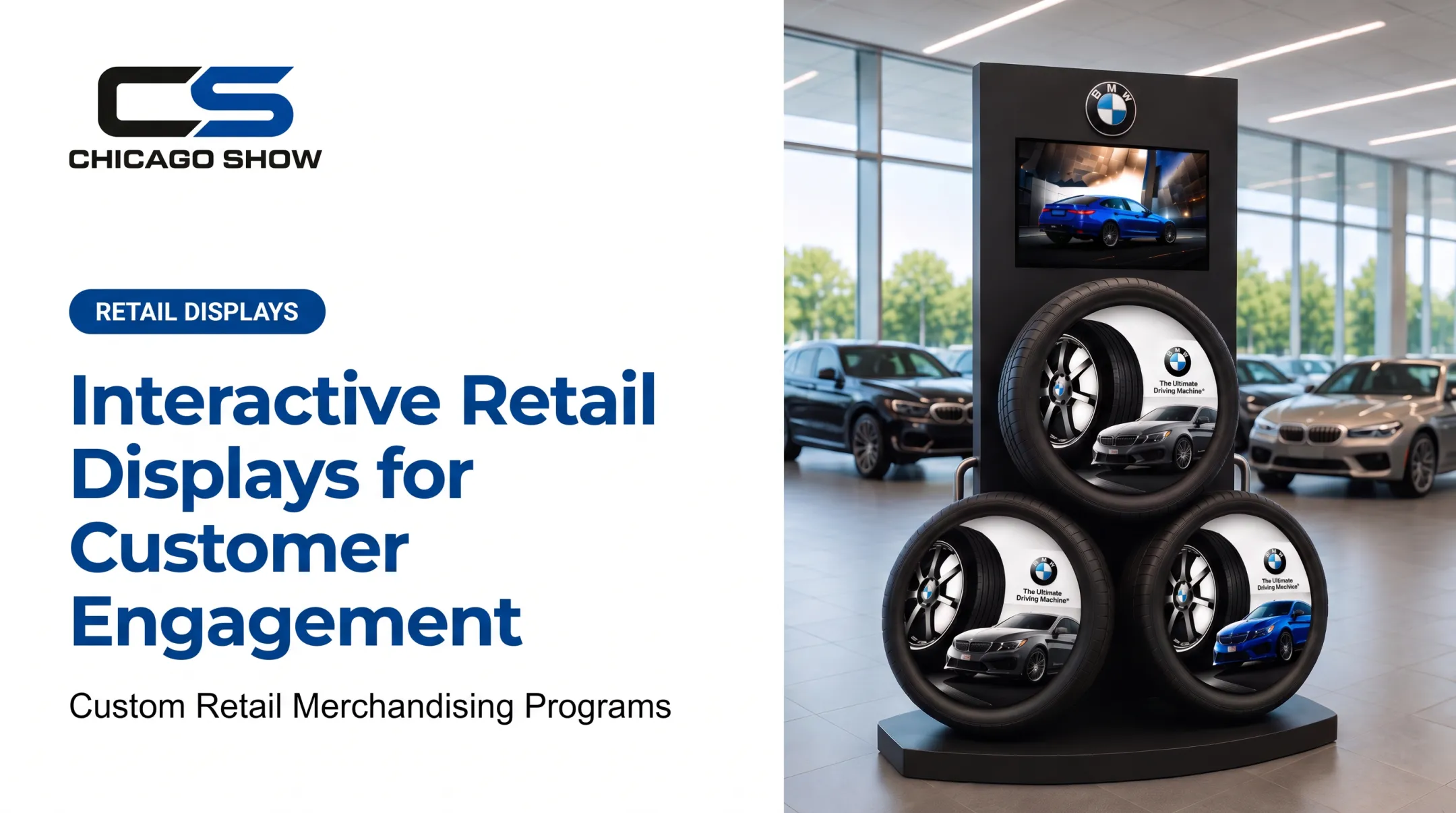
Chicago Show's freestanding BMW tire display illustrates this well. It pairs three large tires with BMW wheel and vehicle imagery, plus a top-mounted video screen — giving shoppers a visual bridge between the tire in front of them and the car it belongs on.

Attention-Grabbing Isn't the Same as Effective
A display can stop foot traffic without helping anyone decide. Bold colors and oversized graphics earn a glance, but if they cover the tread pattern or obscure sidewall markings, they're working against the sale. The goal is product understanding first, visual appeal second.
Research on retail displays in other categories shows the stakes. In POPAI's 2012 Shopper Engagement Study of U.S. grocery shoppers, half recalled at least one in-store display, and more than one in six purchases happened when a display for that brand was present.
The study covered groceries, not tires, but the lesson transfers: a display that's noticed and used can shift a purchase decision.
Tire Display Ideas That Help Customers Choose
Here's where most displays either earn their floor space or become expensive furniture.
Build a Good-Better-Best Path
Group inventory by the differences buyers actually weigh: price, expected mileage, weather performance, and warranty length. Dunlop's Geomax MX34 counter display does this with a focused tier of information rather than an overwhelming product wall — an enlarged tread section, technical graphics on cornering performance, and a rebate message up to $40.
Keep tier labels consistent and short. Something like:
- Value tier — budget-conscious, standard warranty
- Performance tier — enhanced traction, longer warranty
- Premium tier — top mileage rating, extended coverage
Leave room for staff to layer in vehicle-specific fitment advice. The display narrows the field; the conversation closes the sale.
Once options are narrowed, shoppers still need to see and feel the differences up close.
Create a Sidewall-and-Tread Comparison Station
Set up a simple inspection point so customers aren't guessing from a full rack:
- Show one tire from the side for sidewall and branding detail
- Angle or cut away a second tire to reveal the tread face, grooves, and void areas
- Optional: add a worn-versus-new pair only when it is clearly labeled as educational
A comparison station supports the sale; it is not a substitute for a professional tread inspection.
Choose the Right Format for Your Floor
Match the fixture to your space:
- Wall-mounted, single-sided units for narrow aisles or service-drive walls
- Double-sided towers for open showroom floors where visibility from multiple angles matters
- Tiered racks for showing multiple product families at once
- Mobile or rolling displays for seasonal promotions, sidewalks, or service-center entrances
- Countertop units for point-of-sale upsells where floor space is tight
A rolling tire display positioned outside a service center, for example, catches drivers before they even walk in.
Add Wheel Inserts and Vehicle Imagery
Nothing helps a customer visualize fit like seeing a tire mounted on an actual wheel style next to a vehicle image. Group by application — passenger, light truck, performance, winter, off-road — and keep fitment guidance accurate and current.
Make It Interactive, Not Complicated
QR codes and screens can extend a display's reach: tread features, maintenance tips, warranty terms. Chicago Show's BMW display uses a top-mounted screen running vehicle footage alongside physical samples. But always keep a printed card nearby. Not every customer wants to pull out a phone, and staff aren't always free to walk over.
Design Principles for Effective Tire Displays
Good tire displays follow a handful of design rules that apply whether you're building a countertop unit or a 10-foot showroom tower.
Lead With a Clear Message
Place a short headline at eye level ("Compare Tire Options" or "Find the Right Fit") using brand-consistent colors and readable type. Avoid letting oversized graphics creep over tread or sidewall markings; that's the exact information shoppers came to see.
Cut the Clutter, Not the Information
Show only the distinctions that drive a decision: driving conditions, weather needs, vehicle type, budget. Everything else is noise. Group the remaining choices around what the customer already knows about their driving needs, instead of chasing a magic number of SKUs on the floor.
Build for Real Showroom Conditions
Displays get bumped, cleaned, and reloaded constantly. Specify:
- Load capacity appropriate to tire weight and quantity
- Anchoring for freestanding units near foot traffic
- Wheels and locks for mobile displays that need to move but also stay put
Accessibility matters here too. Federal standards under the 2010 ADA Standards for Accessible Design generally require at least 36 inches of clear walking width on accessible routes. Objects mounted above 27 inches can project no more than 4 inches into a circulation path.
A display that eats into aisle clearance isn't just bad merchandising. It can also become a compliance issue.

Choose Materials That Hold Up
Pick finishes for daily showroom wear, not catalog photos:
- Coated steel for corrosion and scratch resistance
- Laminate with protected seams so moisture stays out
- UV-stable acrylic where sun or bright lighting is a factor
Ask for samples and finish details before you commit to a full production run.
Keep It Clean and Consistent
A dusty display undermines trust faster than almost anything else on a showroom floor. Build a simple cleaning routine for tires, acrylic holders, and screens. Recheck sightlines and reach ranges before you lock final placement.
How to Choose and Roll Out a Tire Display Program
A single great display is easy. A program across 40 dealer locations is a different problem entirely.
Start With the Customer Journey
Map where customers enter, browse, and talk with staff. That path tells you whether a display belongs near the entrance, the service counter, or a dedicated comparison zone. Record traffic patterns, lighting, and power access before design work starts. Retrofitting a display around an outlet you forgot about wastes everyone's time.
Define Product and Brand Requirements
List what the display must hold: tire sizes, categories, brands, wheel inserts, signage, and digital components. Separate what's permanent from what's changeable, so seasonal pricing or new product info can be swapped without rebuilding the whole unit.
Compare Formats Against Operational Reality
| Format | Best For | Watch For |
|---|---|---|
| Wall-mounted | Narrow spaces, service drives | Limited visibility from multiple angles |
| Freestanding tower | Open showroom floors | Requires more floor space |
| Mobile/rolling | Seasonal promos, entrances | Needs locking wheels, stability |
| Countertop | Point-of-sale upsells | Smaller product capacity |
Look beyond initial appearance. Factor in assembly time, shipping costs, and end-of-program storage.
Plan for Multi-Location Consistency
A repeatable spec package covering dimensions, materials, graphics, and assembly instructions keeps every location looking the same. For larger rollouts, this usually means:
- Kitting components together before shipment
- Phasing shipments by region or rollout wave
- Tracking reorder quantities and version control across updates

Partner for Custom In-House Execution
This is where Chicago Show fits in. Since 1902, the company has managed custom display and merchandising programs from concept through production, delivery, and ongoing support. That work covers planning, engineering, materials, fulfillment, and quality checks.
Clients including Dealer Tire and Dunlop have relied on this approach for tire displays that need to work across dozens of locations, not just one showroom. Chicago Show checks each unit against specification before it ships, which matters more once a program scales past a single store.
Keep Displays Fresh, Clear, and Measurable
A display isn't a one-time install. Treat it like inventory: it needs review, rotation, and the occasional refresh.
Build a refresh calendar around:
- Seasonal driving needs (winter tires, all-season swaps)
- New product introductions or warranty updates
- Promotional cycles and pricing changes
Train staff to use the display, not just stand near it. Asking a customer about their vehicle, driving conditions, and budget turns a passive display into an active sales tool — far more effective than pointing at whatever's front and center.
Track what's actually happening:
- QR code scans and screen interactions
- Questions customers ask at the display
- Sales by displayed category over time
- Response to specific promotions
Test one change at a time where possible. If you swap a headline and sales shift, you'll actually know why.
Frequently Asked Questions
What are some creative ideas for tire advertising?
Branded tire sculptures, bold but informative signage, vehicle or wheel imagery, and hands-on tread comparison stations all work well. Keep creativity in service of product education rather than pure spectacle.
Should tires be stored vertically or horizontally?
It depends on whether the tire is mounted and what the manufacturer specifies. The U.S. Tire Manufacturers Association allows horizontal stacking or racking for unmounted tires in backroom storage, not on customer-facing displays.
What should a tire display include?
Representative tire samples, visible tread and sidewall details, concise comparison labels, and accurate fitment information. Pricing or promotional messaging helps too, along with a clear next step for the customer.
How do I choose the right tire display for my shop?
Assess your available space, foot traffic, tire dimensions, and whether the display needs to scale across multiple locations. Durability, security, and ease of cleaning matter just as much as initial appearance.
How often should tire displays be updated?
Update displays when inventory, seasons, or promotions change, not on a fixed schedule. Regular inspections and a documented refresh process catch wear and outdated information before customers do.
How can tire displays help customers compare tire options?
Good-better-best organization, application-based grouping, and tread or sidewall samples simplify side-by-side comparison. They support, but don't replace, professional fitment advice from staff.